Silicon Ronin #3: The Legal Singularity & The Synthetic Future
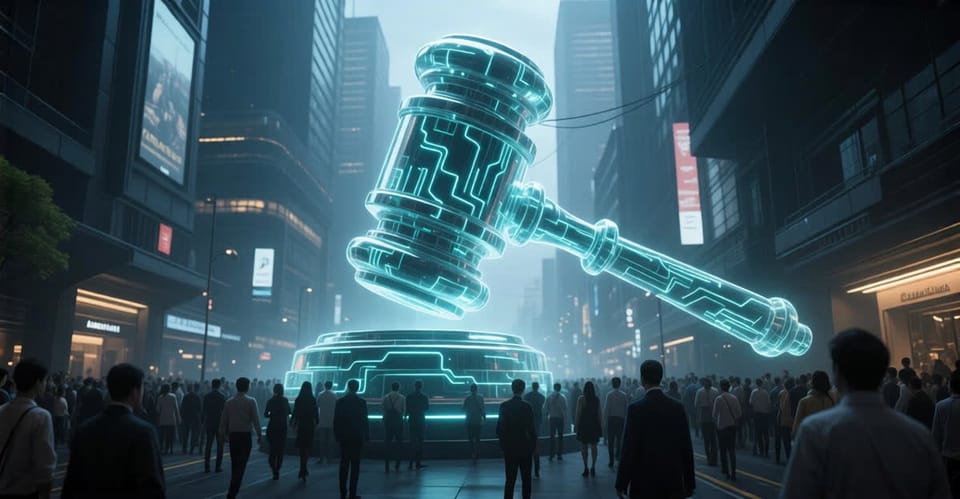
The year 2026 will go down in history not for the models that were released, but for the laws that were written. We have officially reached the Legal Singularity—the point where the courtrooms of California and the legislative houses of India are deciding the fate of human creativity.
The Synthetic Majority: 75% of Content is Now Generated
According to recent Gartner estimates, by early 2026, roughly 75% of AI training data is synthetic. Tech giants are no longer scraping the public internet to learn; they are using "Student-Teacher" models where a massive model (like o3) teaches a smaller video model (Sora 2) how physics works. This is a massive blow to the "copyright infringement" lawsuits—how do you sue a model for learning from data that it created itself?
Hollywood vs. The Neural Network: The Licensing War
The 2026 Hollywood strikes were different. They weren’t about residuals; they were about Neural Likeness. We’ve seen the first major legal precedents where studios are now required to pay a "Digital Royalty" to actors whose physical performance data is used to train custom LoRAs.
In India, the conversation is shifting toward Cultural IP Protection. There is growing pressure to regulate how AI models interpret ancient mythology. If a model generates a depiction of Lord Shiva, who owns the "aesthetic DNA"? The prompt engineer? The model creator? Or the cultural collective?
The Stoira Stance: Ethical Orchestration
At Stoira, we don't hide from the legal storm—we build a lighthouse. Our "Studio Engine" uses a hybrid approach. We utilize licensed base models but layer our proprietary, human-designed Refinement Layers on top. We aren't replacing the artist; we are protecting the artist’s unique "Creative Signature" in an era of infinite reproducibility.
The Ronin Verdict: The modern digital warrior doesn't fight the machine—they learn to own the parameters of the machine.
Silicon Ronin explores the sharp edge of media technology.